Easy Science Experiments to Do at Home with Children
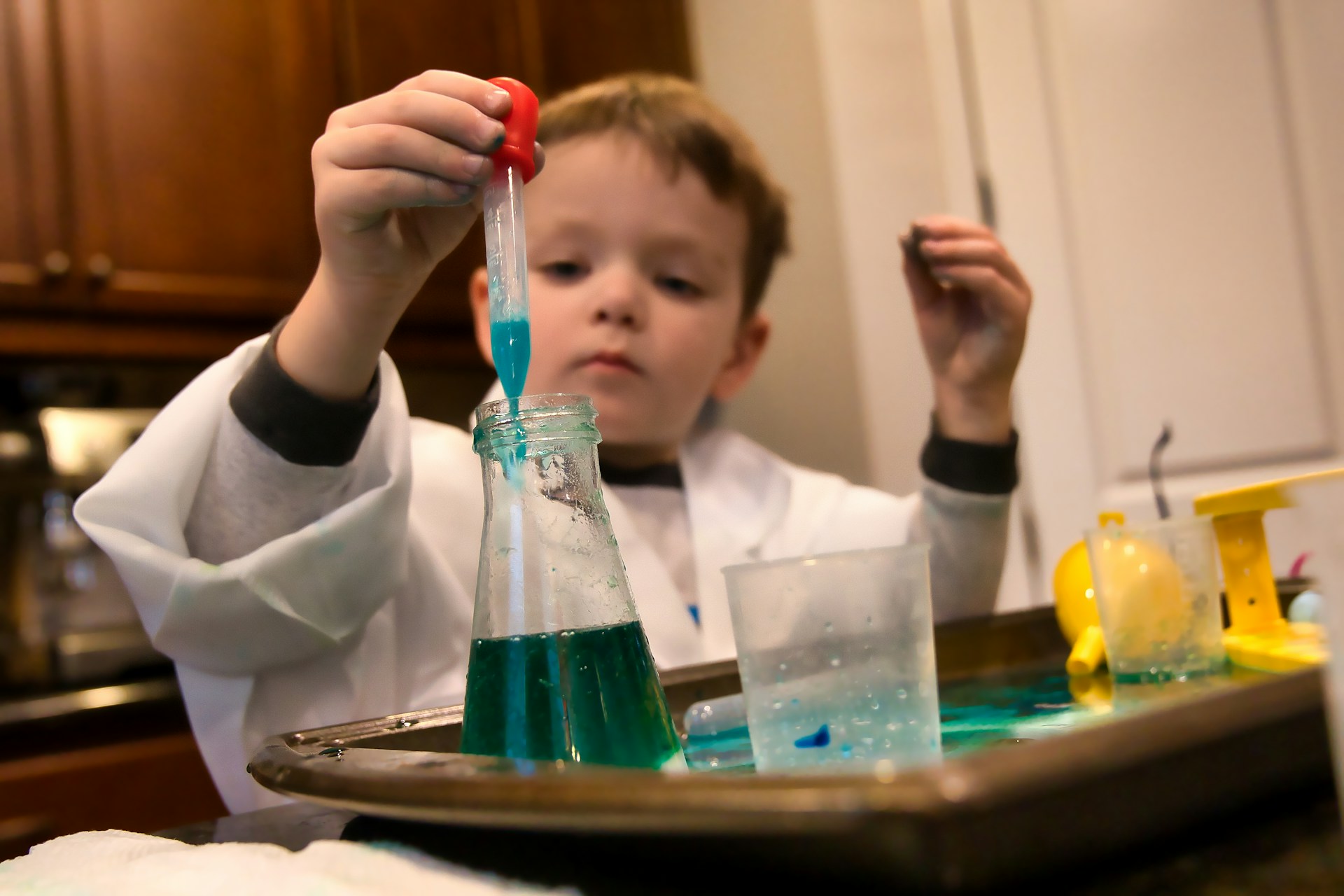
Combine learning and fun with these easy science experiments to do at home. You don’t need fancy lab equipment or expensive materials to do science with your child. Most of the experiments below use items you already have around the house.
Doing experiments with your young child brings many benefits. It introduces them to the scientific method, boosts fine motor skills, and can even build language skills. Let’s experiment!
5 Easy Science Experiments for Preschoolers and Kindergarteners
Are you looking for easy science experiments to do at home? Perfect for a rainy day or summer vacation, science projects awaken your child’s curiosity and encourage critical thinking. Here are a few easy experiments to try.
Blow Up a Balloon
Blow up a balloon without using your mouth or even touching it! In this experiment, children create a chemical reaction using vinegar and baking soda. When these two materials mix, they react and create a gas. The gas blows up the balloon.
Materials: a plastic bottle, vinegar, baking soda, a balloon, a funnel
Steps:
- Fill the bottle halfway with vinegar.
- Add 1 tablespoon of baking soda to the balloon using the funnel.
- Attach the balloon to the neck of the bottle.
- Grab the balloon and dump the baking soda into the bottle
- Watch the balloon blow up!
Follow Up:
You can take this science project to the next level with these extra activities.
- Invite your child to draw a picture of what they noticed in the experiment.
- Have your child repeat the experiment using different materials, such as lemon juice and baking powder or water and Alka Seltzer. Does the experiment still work?
Lava Lamp Science Experiment
Create a homemade lava lamp using materials you might already have at home! This easy experiment teaches children about chemical reactions and the density of different liquids.
Materials: a transparent glass, oil, an Alka Seltzer tablet, food coloring, water
Steps:
- Put about an inch of water in the glass.
- Add a few drops of food coloring.
- Mostly fill the glass with oil.
- Drop an Alka Seltzer tablet in the cup and watch your lamp bubble!
- For extra fun, add another tablet or extra ingredients like glitter.
Follow Up:
Try these extra activities to boost your child’s learning.
- Ask your child questions to boost their observation skills:
- After pouring the oil into the water, what do you notice? Do the oil and the water mix?
- What happens after you add the Alka Seltzer tablet?
- How long does the lava lamp bubble? Try timing it.
- Try mixing oil and water in a glass. Stir with a spoon. What happens?
- Could you make this experiment work with other materials?
Colored Flowers
This easy experiment to do at home teaches children about capillary action and plant biology. You’ll need several days for this experiment, as you’ll watch changes happen slowly over time.
Materials: White flowers, food coloring, 2-3 transparent vases
Steps:
- Cut the white flowers to fit the vases.
- Add a few drops of food coloring to each vase (using a different color for each vase)
- Put one white flower in each vase.
- Observe for several days to see the flowers change color.
Extra Practice:
Practice your child’s data tracking and observation skills by also trying the following:
- Create a simple table for your child to fill in observations. For example:
Day 1 | Day 2 | Day 3 | Day 4 | |
Observations | The water is red. The flowers are white. |
Disappearing Egg Shell
Witness the power of acidic substances with this fun experiment. This experiment may take up to ten days or longer, so you’ll need to be patient as the changes happen.
Materials: Two raw eggs, two transparent glasses, vinegar, water, Post-its or paper for labels
Steps:
- Put one egg in each glass.
- Pour water to cover one egg. Label it “water.”
- Pour vinegar to cover the other egg. Label it “vinegar.”
- Watch the eggs over several weeks.
The vinegar will dissolve the eggshell, while water does not.
Extra Practice:
Build your child’s skills by completing a chart of observations:
- Create a simple table for your child to fill in observations. For example:
Day 1 | Day 2 | Day 3 | Day 4 | |
Observations | The egg in the vinegar has bubbles on it. The egg in the water is sitting at the bottom of the glass. |
Slime
Preschoolers and kindergarteners love getting their hands dirty. This slime experiment is a sensory experience that’s fun to play with. For easy clean up, you may want to put out some newspaper on the table where you’re working.
Materials: Corn starch, water, food coloring (optional), a bowl, a spoon.
Steps:
- Add one cup of corn starch to a bowl.
- If using, add a few drops of food coloring to a half cup of water.
- Slowly add water to the bowl of corn starch, stirring as you go.
- Test the slime by playing with it. You can add more corn starch or water to get the right consistency.
- Squeeze the slime and it will harden, let go and it will drip out.
Follow Up:
Take this easy science experiment to the next level with these add-ons:
- Try different quantities of corn starch and water. How does it change the slime?
- Look up non-Newtonian fluids. Is this slime Newtonian or non-Newtonian?
More Easy Science Experiments for Kindergarteners and Preschoolers
Looking for more easy experiments to try? Here are a few more ideas to try:
- Build a Lego Boat: Challenge your child to build a boat using Legos. Then, test it in the kitchen sink or a basin of water. Does it float? For extra fun, put your boat to the test. How many pennies can it hold befit sinks?
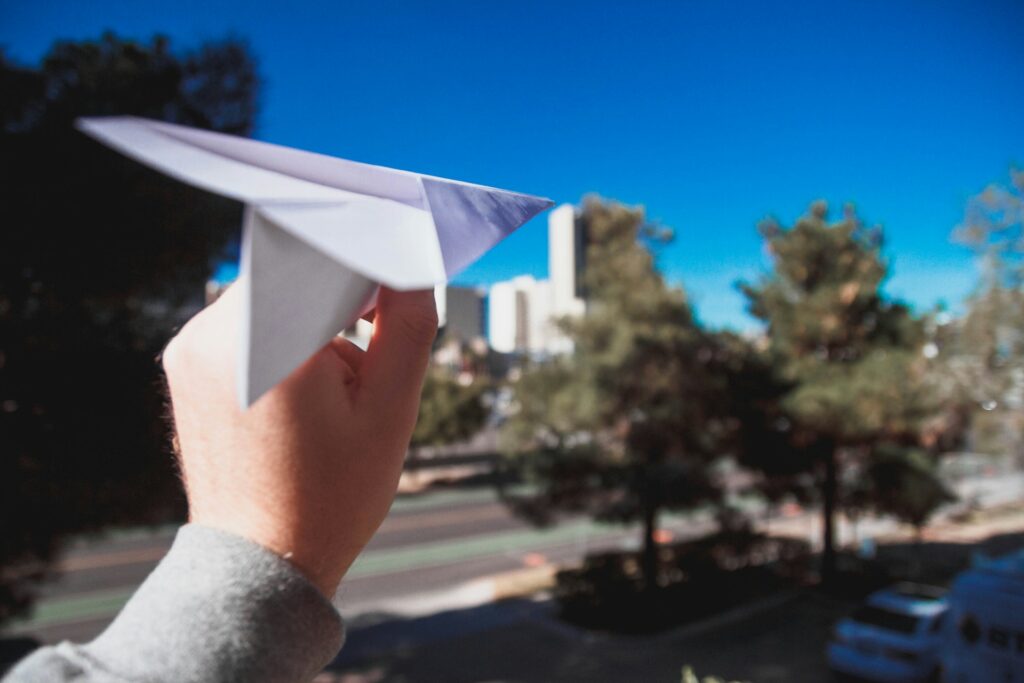
- Create the Longest Flying Airplane: Try out different paper airplane designs. Which one flies the farthest?
Also try using different types of paper, such as heavier or lighter weight paper. Does it make a difference?
- Egg Drop: Protect the Egg: Ask your child to build a structure to protect a raw egg using materials from around the house. The goal is for the egg to survive a fall from the roof or second story window. You might use recycled materials such as a cardboard box, scrap paper, newspaper, masking tape, etc.
Then, test it out! Pack up the egg and drop it. Did it break? If so, try again.
- Build the Tallest Structure: Challenge your child to build a tower using only toothpicks and mini marshmallows. How high can you go? Measure your tower with a ruler.
- How Strong Is Your House?: Imagine you lived hundreds of years ago. How could you build a house? Use different natural building materials to build mini houses. For example, use mud, sticks, and rocks. Can the house withstand “rain” from the hose?
Tips for Easy Experiments To Do At Home
Doing experiments is a fun way for children to build their skills and also a basis for understanding important scientific concepts. Use these tips for the best outcomes:
- Have extra materials on hand. Children often like to repeat experiments. Also, having extra materials makes it easier for you to demonstrate the experiment first and then let your child try doing it independently.
- Encourage your child to ask questions. If they are able, they can write down their questions and research the answers later.
- Provide cleaning materials like rags, a broom, and a dustpan for spills. That way, your child can clean up independently.
- If you’re planning on doing a few science experiments with your child, consider creating a science journal. This way, your child can draw or write about each one. You can use any notebook and encourage your child to write down the name of each experiment. Depending on your child’s writing skills, they can also write observations about the experiment or draw a picture.
Awaken Your Child’s Curiosity with Easy Experiments
Foster your child’s curiosity and interest in science with fun experiments and science projects. All it takes are some basic materials, curiosity, and a little time.
Get your child off to the best start by choosing a daycare or school with a strong preschool curriculum. Montessori Learning Centre is an excellent preschool in Calgary that prioritizes engaging activities that promote learning in young children. Discover our preschool and daycare programs. Get in touch to learn more!